
Updates from the hills of Tuscany, a restored farmhouse in Chianti, midway between Florence and Siena. We write about local history and culture, life in Tuscany, the seasonal changes, pleasures of the garden and country kitchen, local stories and encounters with wildlife.
Friday, March 10, 2017


Saturday, February 25, 2017
Waterfalls
After a Good Rainfall
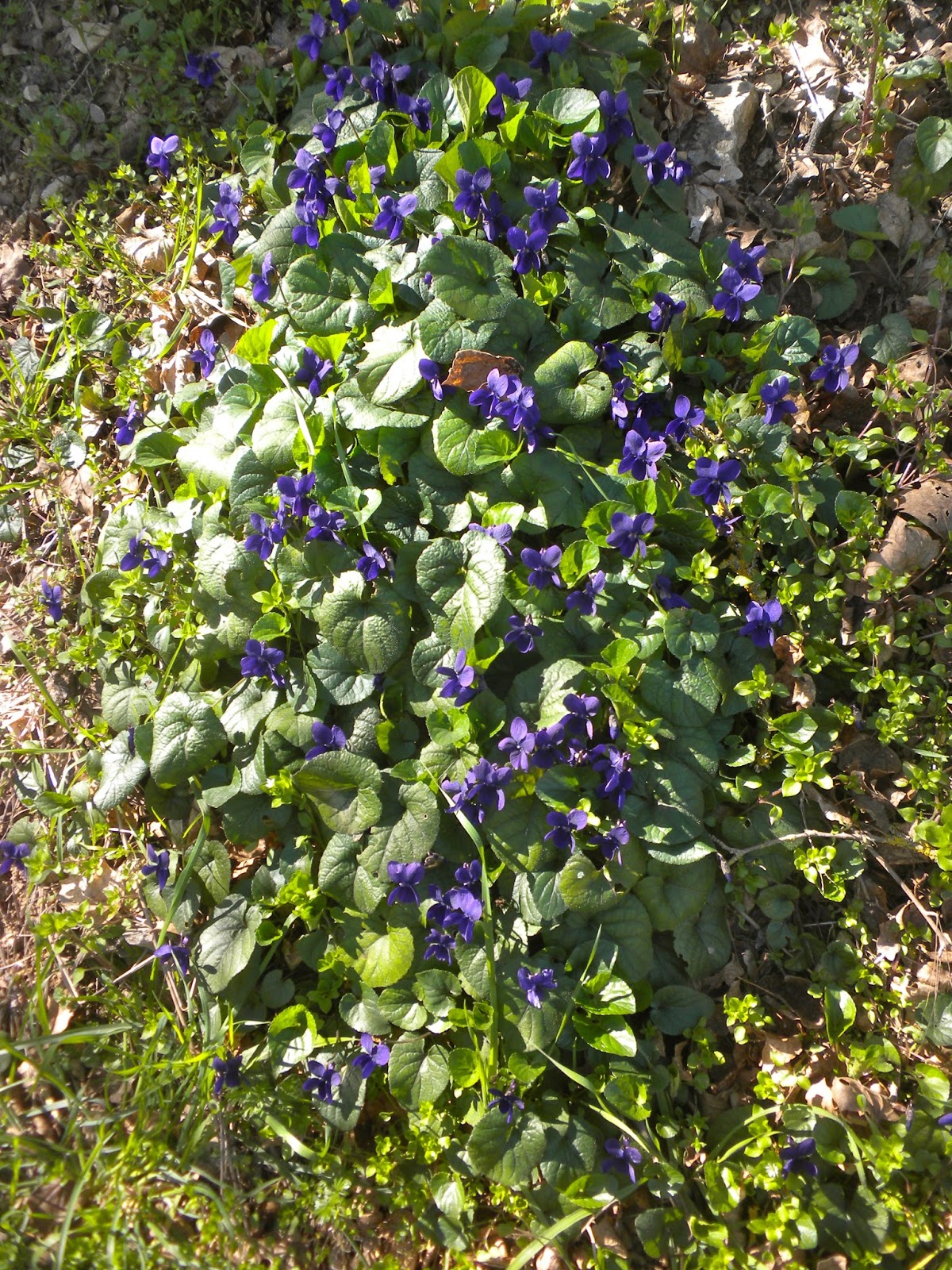
During most of the year the two streams that run through and beside Le Ripe are completely dry. Even the Pesa river in the valley below dries up in summer, although it is said to continue flowing underground.

Recently Le Ripe received a gift of 82mm or more (over 3.2 inches) of rain in 24 hours, and it shows.

There are waterfalls everywhere.
Monday, February 20, 2017
From Farm to Forest
Back to Nature
 |
| registry map of Le Ripe |
When we first arrived at Le Ripe we invited an 'arboreal archaeologist' to examine our trees. We rather fancied that some of the old apple trees might have proved interesting and we thought she could advise us on how to proceed with new plantings at Le Ripe.
When I showed her the dense woods, full of brambly undergrowth, trees reaching for the sky through thickets of blackthorn and juniper and said something cheerful about it all having gone back to nature she stopped my ramblings with a curt: 'This is land which has degenerated'.
When I showed her the dense woods, full of brambly undergrowth, trees reaching for the sky through thickets of blackthorn and juniper and said something cheerful about it all having gone back to nature she stopped my ramblings with a curt: 'This is land which has degenerated'.
Although at the time we were shamed into silence, we now have a different perspective (see the post on Monks and Forests) on the fate of forests.
However, paying respect where respect is due: Le Ripe was once a fully working farm where the native woods provided fuel, forage, fruits and timber for tools; where grapes, cereal crops and fruit trees were cultivated; where livestock grazed; where bamboo and certain trees were planted for their agricultural usefulness. Since it was abandoned in the 1950s or even earlier, the land has been steadily reverting to its pre-agricultural state, 'degenerating' in a sense, although regenerating in another sense.
Until recently, apart from a detail in a neighbour's family shot from 1946 (see below), we had no documentary record of this process, but now, thanks to the internet we have found aerial photographs, starting in 1954, which provide a striking testimony.
 |
| 2013: for the purposes of comparison with 60 and 70 years ago |
The
entire area captured in these aerial photographs is of great interest,
but for the purposes of our exercise, the Le Ripe property comprises the
central area of the photograph, bordered to north and east by the Pesa
river, to the south by creeks and to the west by the crest of the
forested hill (see map at top of post).
 |
| Le Ripe 1946, from the Pesa river (the houses in the foreground belong to Casanuova delle Ripe, a hamlet below Le Ripe): note the terracing, the tracks, the sparse vegetation. these were pastures, grape terraces and fields for growing cereal crops to which the large ricks of oats and wheat bear witness. |
Thursday, February 2, 2017
Ballads, Laments and Maledictions
Tuscan Folk Songs
 |
| scenes no longer seen in Tuscany |
In the 1960s and 70s a young Tuscan woman of Spanish-Swiss parentage took it upon herself to collect, record and perform the traditional songs of Tuscany.
Born in Fiesole, brought up in postwar rural, poor Tuscany with a nanny from the Mugello area, Caterina Bueno was to dedicate her life to the preservation of a precious folk tradition. In her own words, when asked whether she was more interested in ethnomusicological research or performance: "Research! Because for me performance serves to finance research and to augment it."
 |
| a very young Francesco De Gregori, with Caterina Bueno and Antonio De Rose in 1971 |
Thursday, December 15, 2016


Monday, December 12, 2016
Coming Home
Autumn Clearing
After some weeks' absence we return to a changed scene: although according to the calendar it is still strictly autumn, it is picturesque autumn no longer: rain, wind and lack of sunlight have drained the colour from the land. Nature is resting.
 |
| the bronze and copper leaves of the hortensia quercifolia, a gift of autumn |
Yet the garden is greener, bushier, leggier than when we left. And since our return the sun has been shining every day, which makes for tingling, beaming mornings in which to work outside.
Tuesday, October 4, 2016
Autumn in the Campi di Sotto at Le Ripe
Quiet Prospects
 |
| a handsome hawthorn tree in berry |
Clearing the lower meadows at Le Ripe is a yearly job, as described in 2013. It keeps the brambles and bamboo down, encourages grass and makes for pleasant walks.
Thursday, September 22, 2016
Abbadia San Salvatore, on the slopes of Monte Amiata
A Town Full of Surprises
 |
| Monte Amiata |
It is not where most tourists stop on their way around Monte Amiata in southern Tuscany. Abbadia San Salvatore is a township of 6000 souls on the northern slopes of Tuscany's most easily identifiable mountain. Unassuming and ordinary, it is the sort of place you drive through hurriedly, on your way to somewhere interesting.

And yet we stopped: was it that lunch beckoned, or was it that we noticed a sign proclaiming Abbadia San Salvatore as the home of an ancient Bible? Somehow the quest for lunch and our curiosity combined to make us stop. We would discover that this seemingly dull, grey town held several surprises.
Thursday, September 15, 2016
The Garden at Villa La Foce
Foreigners in Val d'Orcia
 |
| Cecil Pinsent's closed green garden at La Foce with its crisp hedges. Monte Amiata is palely visible to the south-east |
If you look at the historical black and white photographs on the Villa La Foce website, as backdrop to the depictions of hardworking and celebrating sharecropping farmers, you will see a lunar landscape: harsh, barren-looking hills, and stretches of empty terrain succumbing to the plough for the first time. Today's intensely-cultivated, ordered and verdant sweep of valley and hills with the famous cypress-lined road winding up the hill opposite La Foce were unimaginable 100 years ago.
 |
| Val d'Orcia before the new owners of La Foce intervened |
 |
| This ostensibly timeless scene has come to symbolise Tuscany, despite the fact that it represents only the area south of Siena, that it is completely man-made and of recent creation, and that its creators were a British garden designer, a British-American woman and her Florentine husband. |
Sunday, August 28, 2016
A Drought in Chianti
Where is the rain?
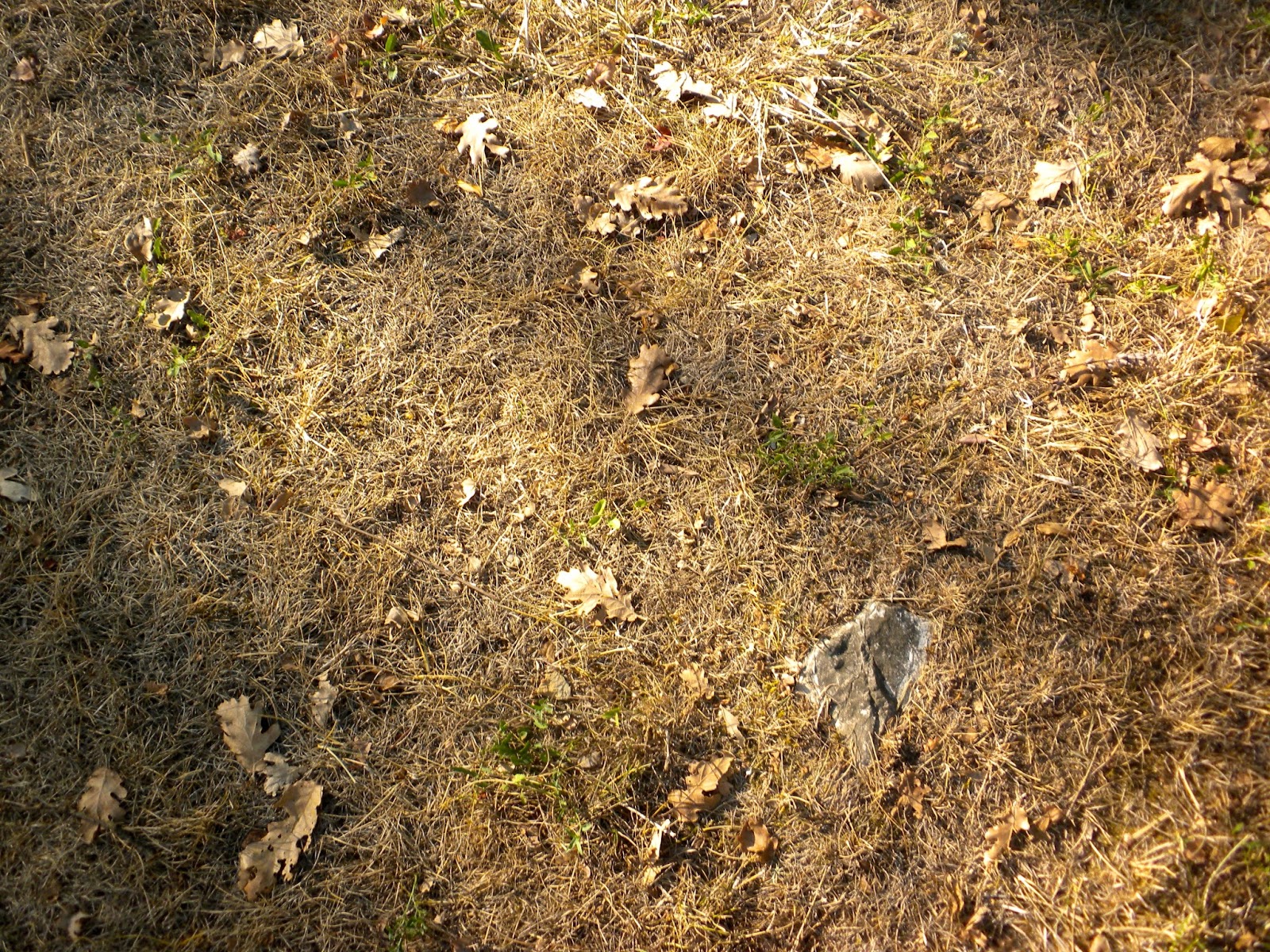 |
| the parched earth; grass non-existent; dead leaves from tired trees |
 |
| even the St John's Wort looks exhausted |
Monday, August 8, 2016
Art in the Wilds of Chianti
Sculptures in the Forest
Hidden in the hills about 14 kilometres north of Siena, is a small but interesting sculpture park. Privately-owned and run by a cultural association, the park was opened in 2004. Its founders, Rosalba and Piero Giadrossi, bought and converted seven hectares of wood formerly fenced for raising wild boar.
 |
| horribly kitsch, this installation does raise a smile at the park entrance |
Except for the amphitheatre area near the entrance, the park is really a wilderness; which makes it all the more interesting. Evergreen oak (quercus ilex) and other oaks, cistus and broom provide a shady and sometimes colourful setting for thirty-odd sculptures and installations.
 |
| the Mondrian-influenced ticket-office and shop; even the parking area has a hint of artfulness about it |
Monday, July 11, 2016
Tending the Rhubarb and Tomato Jungles
The pleasures of a vegetable garden
 |
| butternut pumpkin flowers |
Subscribe to:
Posts (Atom)