Showing posts with label Recipes. Show all posts

Wednesday, September 11, 2019

Pici and the Big Garlic

Pici all'aglione and other delights
Val di Chiana

People who dine out in this part of the world inevitably come across a local dish called pici all'aglione. Pici are a form of thick, hand-rolled spaghetti, which originate in the southern part of the province of Siena in the Val di Chiana; some even claim they were eaten by the Etruscans. 

The Tomb of the Leopards at Tarquinia, dating to the 5th century BCE

A banquet is depicted in the Tomb of the Leopards at the Etruscan necropolis at Tarquinia. It appears that a servant is bringing to the table a bowl containing a long, irregular sort of pasta which has been identified as an early version of pici.
Honestly, I have peered at the image above but cannot make out this bowl of pici...

the slightly rough texture of handmade pici is visible here

Pici are made of flour, water and a little olive oil and salt, with occasionally an egg added. 

pici made with egg look prettier but the eggless sort is the norm
 Pici can be a vehicle for many sauces including meat ragoûts and duck, but apparently the authentic one is all'aglione, a simple tomato sauce enriched with garlic.

pici all'aglione
 However this is not just any garlic, it turns out. Until recently we believed the word 'aglione' to be a friendly way of describing a large quantity of garlic; in other words, signalling a very garlicky sauce.

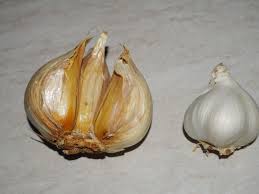
aglione tends to be a bigger variety of garlic, yellowish in colour and more delicately flavoured

But we have been enlightened. When our market greengrocer asked whether we preferred aglione to aglio, all was explained at last.
Aglione is actually a special variety of garlic, Allium ampeloprasum var. Holmense, originating in 
Val di Chiana and Val d'Orcia in southern Tuscany. It has a good, round flavour, which is more delicate than normal garlic, and is prized for being particularly digestible. 
The heads of this variety of garlic tend to be larger than regular garlic and the cloves are creamy-yellow in colour.

Allium ampeloprasum var. Holmense

Aglione can cost four times as much as regular garlic, also because it is a rarer variety

It also has the property of softening and dissolving when cooked so that you can simply crush entire cloves in the pot with a wooden spoon. 

To make a simple aglione sauce, cook some aglione (a clove per person) in olive oil and half a glass of white wine in a covered pan until the garlic is soft and you can squash it with a wooden spoon (about 15 minutes); add fresh or bottled pelati tomatoes, some salt to taste and simmer until reduced (about 20 minutes). 
That is all. Add to your pici and enjoy. 


Tuesday, August 20, 2019

an Historical Florentine Pudding

Lo Zuccotto

Recently a friend brought a pudding to Le Ripe which I had heard of but never tasted.


The pudding casing, made of spectacularly red sponge slices, hid a half-chocolate mousse, half-cream filling studded with candied peel and chocolate kibbles


 Formerly known as Caterina's Helmet, this Florentine pudding hails from the days of the Medici.
 In the late Renaissance at the height of the family's fortunes, Caterina de' Medici, Lorenzo il Magnifico's daughter, as queen of France, apparently asked Bernardo Buontalenti to invent a new dolce to celebrate the Spanish ambassador's arrival. 

Saturday, October 17, 2015

Food of the Month: Remarkable Cavolo Nero or Tuscan Kale

 A Rustic Vegetable, Rediscovered

other names for this brassica are dinosaur kale, black kale, flat back cabbage, palm tree kale
It appears that a local peasant staple is currently the healthfood of choice in much of the western world. Brassica oleracea Lacinato is a tough plant which requires little attention and enjoys a long growing season, from one spring to another. It is particularly crunchy and tasty following winter frost. 

Monday, September 14, 2015

Figgy Pudding

What to do with all the booty

 This year, with its hottest summer on record, seems to have worked wonders in the field. I am told that the grapes are promising, the olives are abundant and I can certainly attest to the incredible fig harvest of 2015, which is petering out only now. 

Wednesday, July 1, 2015

Ocimum Basilicum

It's not Summer without Basil


Once on a trip to Greece we noted the pots of small-leafed basil sitting, round and pretty, on verandahs. To our surprise we discovered that it was decorative basil, that the Greeks do not eat basil. Subsequently we introduced some Greek friends to pesto and it caused quite a sensation.


Saturday, May 16, 2015

Pizza in Chianti

The Requisites of a Good Pizza

We have had an outdoor pizza oven at Le Ripe for one year already but it is only now that we feel relatively confident about our pizza production; we still have to be tested for large numbers.

Below is a summary of the 10 most important things we have gradually learnt about making - and eating - this Neapolitan specialty.

Monday, April 27, 2015

Wild herbs and weeds for lunch

Country lore and the table

The 4th Sunday of every month a small organic market is held at Greve in Chianti where almost all the produce is local. The market is called Il Pagliaio which literally means straw rick or stack.


Fresh bread and other baked goods, herbs and spices, preserves and jams, cheeses, wine and oil are all on sale. One or two stalls also sell their farm-grown vegetables. And one stall in particular, run by two soft-spoken farmers, husband and wife, specializes in fresh herbs and edible 'weeds' gathered in the countryside. 
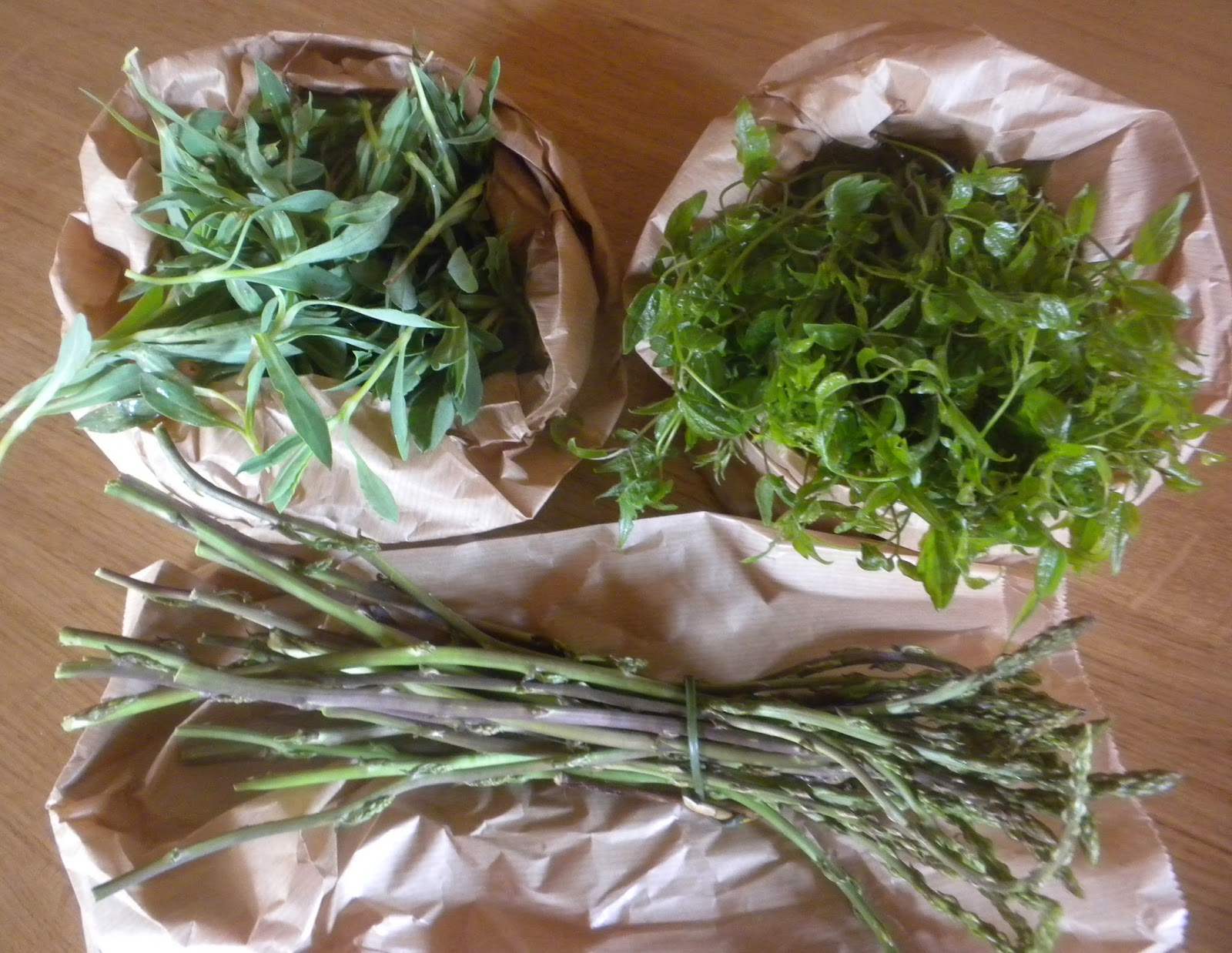
strigoli, clematis vitalba sprouts and wild asparagus


Sunday, March 8, 2015

The sweet side of Siena: ricciarelli

Almond Complex

pretty well the archetypical ricciarello

A good ricciarello (richyarello) is thickly dusted with icing sugar which is cracked on the surface; it is  lightly crunchy on the outside but soft and melting on the inside. It should have a definite marzipan (or bitter almond) taste and be quite sweet. It traditionally appears at Christmas to be consumed with vin santo or other sweet wines but nowadays we can indulge anytime of year.

these ricciarelli look perfect; they also look homemade as they do not have quite the 'boat' shape of the commercial ones
The ricciarello would appear to go back a long way, to the time of the Crusades, or so the Sienese would have it. A returned crusader called Ricciardetto della Gherardesca (a mouthful in himself), legend says, had tried these tasty Middle-Eastern morsels in the Holy Land and introduced the recipe to his hometown.

Saturday, April 5, 2014

Garmugia: soup from Lucca

A reviving early spring soup

fava beans, artichokes, peas and asparagus, amongst others

The origins are unclear but this soup is certainly found only in the environs of Lucca and it is clearly a dish to be cooked and eaten in early spring when the fava beans and peas are at their most tender. The origin of the name garmugia (rhymes with Perugia) may be germiglio or sprout since the vegetables are all the first of the season.

Wednesday, October 23, 2013

Fruit of the Month: the quince

The Quintessential Quince

one of our two quince trees

October is the month of the quince. At least it is at Le Ripe where the overall success rate in our orchard is somewhat limited: quinces abound this year but there is nary an apple.

quinces are very attractive but I store them on windowsills also to ripen them and to enjoy their lovely aroma


Monday, September 16, 2013

Fruit of the Month: Figs

It's that fig time again


I wrote about figs last year but it is fitting to record this year's harvest of the most abundant, low-maintenance, stress-free gift of the gods we have at Le Ripe.

I predict I shall be bottling kilos of fig puree this season, but our guests will also be able to benefit from the bounty of our several trees.


To think that we did not have to plant, cage, prune, feed or spray these trees. Our only task is to harvest and eat.

Friday, August 16, 2013

Red Harvest

Pomodori!


Our pride and joy - and pleasure - this morning's harvest of cuore di bue (beefsteak-type), fiorentini (local, grooved tomatoes) and cherry-type picadilly tomatoes. Some we leave to ripen on the sill, others we store in the fridge, most we eat as soon as possible, see below


Tomato Toasts
nice simple recipe for quick summer lunch
make toast with your favourite bread;
fatly slice beefsteak tomatoes;
generously drizzle good olive oil on toast;
  add tomatoes, salt 
and lots of freshly-ground pepper. 
Perfetto.

Saturday, June 8, 2013

Biscotti di Prato or Cantucci

A biscuit by any other name...


Informative wikipedia tells us that the word biscotto which means simply twice-cooked (bis called at the end of a performance means encore and a bisnonno is a great grandfather) has its origins in the crunchy, almond-filled biscuits from Prato which can trace their roots back at least as far as the 18th century. Hence the cantuccis' correct name is biscotti di Prato; the Anglo shortened version is not so far off. However around our parts they are called cantuccini or cantucci, (double cs are soft, ch as in chew) which means little corners.


Thursday, May 23, 2013

Lunch in Siena

And after the tour....

Entrance to Hosteria Il Carroccio in Via Casato di Sotto, around the corner from the Piazza del Campo
Try this cheerful, unpretentious little trattoria, a few steps from the Piazza del Campo (looking at the Palazzo Pubblico, the street is up to the right). Renata the owner will welcome you with smiles and find you a place out or in. We recommend inside as it is so pleasantly decorated in bright colours with a variety of photos, paintings, prints etc displayed on the walls. 
We tried the medieval antipasto which was genuinely interesting and tasty, but only for meat lovers and those who like offal. There are plenty of other choices including vegetarian. I always think that Italy is one of the easiest places to be a vegetarian.


Interior detail

Monday, April 8, 2013

Limoncello

Lovely Limoncello

essential: untreated lemons

...warming in winter, refreshing in summer;
excellent for adding to cake mixtures, crepes, summer drinks, drizzled on ice-cream;
or even to cure a cold...

Again, not a Tuscan recipe, limoncello originates in the lemon-rich coastal area south of Naples, but it's a liqueur we make each winter even in the heart of Tuscany. It's marvellous that oranges and lemons ripen when we most need their vitamin C and bright colours.


recipe:

ratio: 12 lemons:1k sugar:1l water:1l alcohol

12 untreated lemons
1 kilo/5 cups/35.2 ounces (or less to taste) sugar
1 litre/4.22 cups/33.8 fluid ounces of  95% proof ethyl alcohol
1 litre ditto water
 (the more water you use the gentler the impact of the limoncello, but these are the canonical proportions)

Scrape/peel or grate the zest only from the lemons, leaving the white pith, and steep in the alcohol in a covered  jug or bowl overnight. The alcohol will draw all the lemon essence and much colour from the zest

pithless zest


Make a sugar syrup by blending hot (just boiled) water with sugar (you can also cook them a bit but usually the sugar will dissolve well in the very hot water)

Next day strain off and discard the lemon zest and add the yellow lemon liquor to the syrup: voila'!

If the syrup is warm when you blend it with the alcohol the limoncello will be cloudy; if it is cold it will be clear

Bottle and keep, or start tippling! 
There is no need to 'age' it.

use clean recycled bottles and cork firmly