Showing posts with label Seasons. Show all posts

Tuesday, October 2, 2018

the Greenhouse comes into its own...

...preparing for the cold...


Citrus trees start to suffer when temperatures get below 5 degrees Celsius. Recently there were a couple of nights that were pretty close to the limit, so we decided, for caution's sake, to retire our citrus into the greenhouse: one clementine, two lemons and a lemon which has reverted to its scion and become an attractive Seville orange...

  
...are now safely housed in our new greenhouse will be put to the test for the first time this winter...


The citrus will be in the company of a gardenia, two plumbagos, a polygala, three amaryllis, a cactus, a recovering orchid and a small mandevilla, not to mention their permanent hosts: jasmine, a large mandevilla and a stephanotis...


The greenhouse has been fitted with a special red light to promote growth and warmth. We hope our tender plants will be cosy over the winter.

And we look forward to quiet winter days when we hope to sit inside enjoying the green and the - relative - warmth.

Sunday, July 15, 2018

Summer wildflowers


Summer fields sprinkled with flowers

Besides scabiosa, wild chicory, poppy (rare at this point of summer) wild dianthus (pink) in the river meadow below Le Ripe, many 'new' wildflowers intrigue the curious observer.


Silene vulgaris, bladder campion, maidenstears

Sunday, August 28, 2016

A Drought in Chianti


Where is the rain?

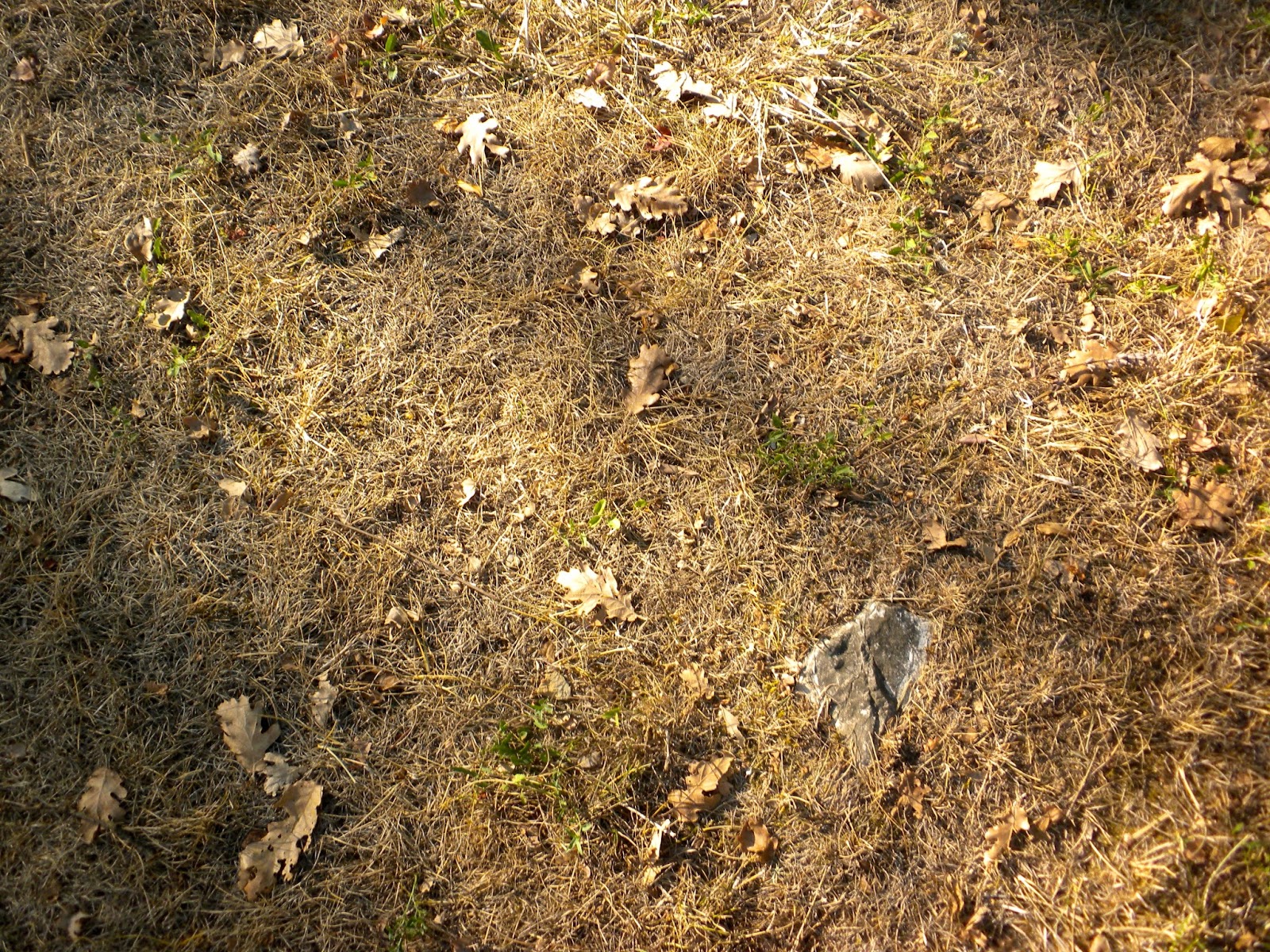
the parched earth; grass non-existent; dead leaves from tired trees
even the St John's Wort looks exhausted
It has been many weeks since our part of Chianti has seen rain. It is still summer of course and summer means heat, dry grass and watering each evening.

Sunday, January 3, 2016

Coming Home

 Back to Le Ripe in Winter

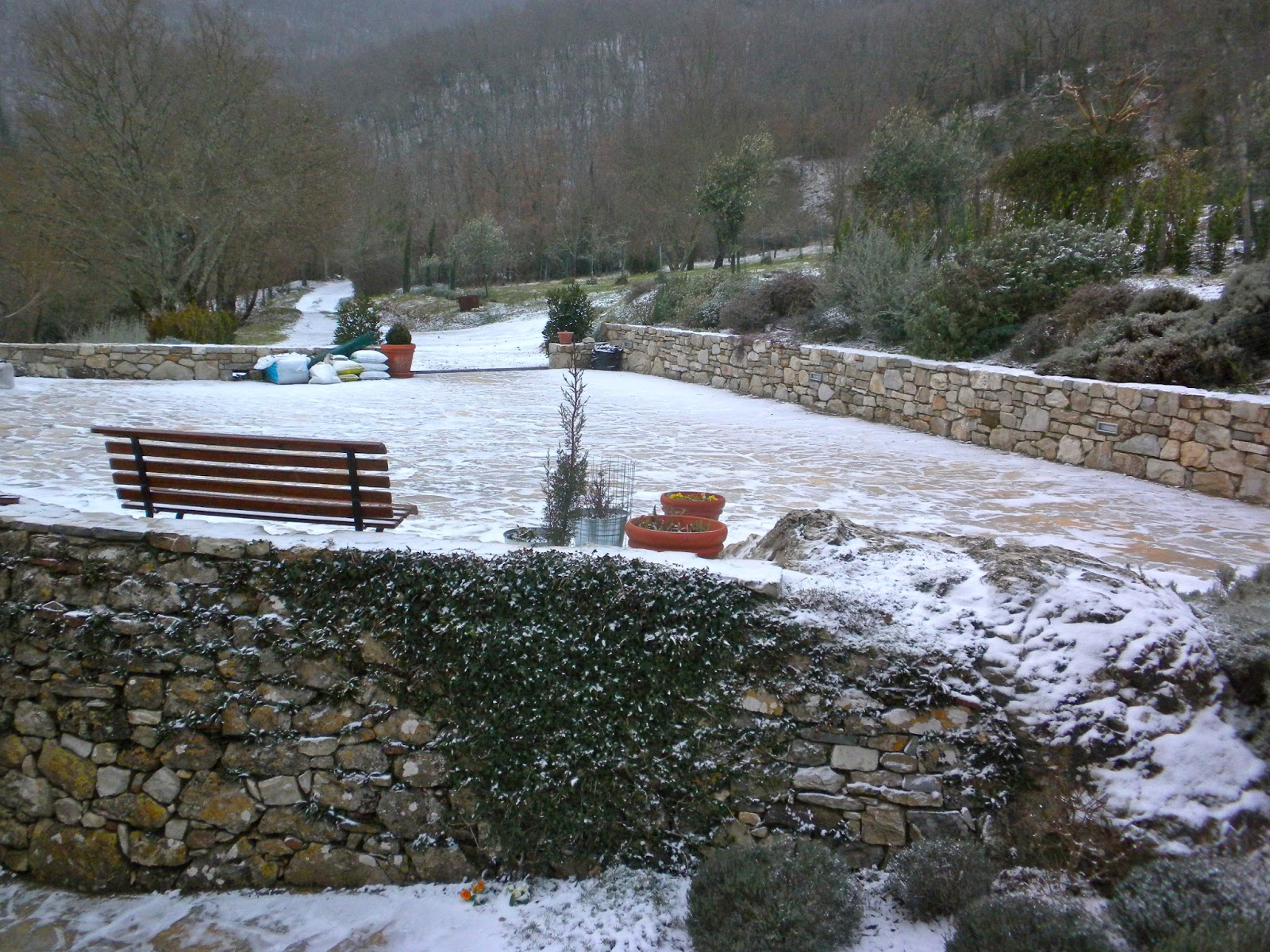
We have been absent, in the southern hemisphere, for some weeks. In the meantime winter has set in and changes have taken place.

Sunday, August 16, 2015

The Storms of Summer

When the Storms of Summer mean Summer's End


zoom-in on nearby Radda between storms
 Summer's lease may have all too short a date, but this summer has been a whopper, with record temperatures and record lack of rain. We couldn't wait for summer to end.
recent storms have given rise to 'trombe d'aria' or tornadoes such as this, seen off Massa Carrara (courtesy of centrometeoitaliano.it)
 

Friday, March 21, 2014

Spring!

When daisies pied, and violets blue,
And lady-smocks all silver-white
And cuckoo-buds of yellow hue
Do paint the meadows with delight,
The cuckoo then, on every tree,
Mocks married men; for thus sings he,
“Cuckoo; Cuckoo, cuckoo...” 

When shepherds pipe on oaten straws,
And merry larks are ploughmen’s clocks,
When turtles tread,and rooks, and daws,
And maidens bleach their summer smocks,
The cuckoo then, on every tree,
Mocks married men; for thus sings he,
“Cuckoo; Cuckoo, cuckoo...”


William Shakespeare, 
Song from Love's Labour's Lost (1594-5)
in advance celebration of the 450th anniversary of his birth 
(circa 23rd April 1564)

Thursday, March 6, 2014

Forcing Spring


It's coming. We all know that. Yet the more impatient amongst us cannot resist hurrying it along with a burst of imported, bright-faced primulas.


Still, hidden in the woods and alongside streams, native primroses - and violets - have appeared, reassuring us that we are not
deluding ourselves.


Wednesday, February 19, 2014

Garden Maintenance and an Early Spring

It's all happening at once

The endless rain last month gave way to mild temperatures and hints of spring. It is mid February and feels like March, even April some days. End of winter jobs like pruning suddenly seem urgent.

This untidy abundance 

 is suddenly and severely clipped back

  in hopes of future renewed luxuriance. 

The appearance of the first blossom, early bulbs and even asparagus spears has everyone scurrying around like White Rabbits.

Wednesday, January 29, 2014

Blackbird Days

I giorni della merla 
The days of the blackbird

the female blackbird is in fact brown

In Italy, 'blackbird days' are three days at the end of January and the beginning of February, reputed the coldest in the year. The popular belief is that if they are indeed very cold, spring will be early and warm; if they are mild, spring will be late and colder...This is a bit of country lore I have heard locally in Chianti too.


Various folktales are associated with the so-called days of the blackbird hen - merla being feminine, this is a female of the species. The simplest and most pleasing could be narrated just so:

In the beginning, all blackbirds were as white as snow and prided themselves on their plumage. One day in the cold heart of winter, a mother blackbird and her chicks sheltered in a chimney for three frozen nights. When they emerged on the first of February, they had turned as black as soot. From that day forward, all blackbirds were black.

(This works better in Italian where blackbirds are called merli, which has nothing to do with the Italian word for black..) 

a white blackbird: perhaps this one did not hide in the chimney

Wednesday, October 23, 2013

Fruit of the Month: the quince

The Quintessential Quince

one of our two quince trees

October is the month of the quince. At least it is at Le Ripe where the overall success rate in our orchard is somewhat limited: quinces abound this year but there is nary an apple.

quinces are very attractive but I store them on windowsills also to ripen them and to enjoy their lovely aroma


Tuesday, October 15, 2013

On the Way Home

The Flaming Cypress


A crimson glory vine (vitis coignetiae) sets fire to a solitary cypress.

Admired each year in October on the SP 76 between La Piazza and Molin Nuovo, Comune of Castellina in Chianti.

Thursday, October 3, 2013

Change of Season

Autumn is icumen in


Time to bring in the tender pot plants, the gardenia, dipladenia (mandevilla), azalea, hibiscus, tiny cacti, cyclamen, gerbera and amaryllis. With temperatures at night going below 10 degrees, now is the time to protect these plants. Our two citrus trees (lemon and cumquat) will also be hauled to shelter.
So goodbye to the little crowd of pots under the fig tree opposite our front door and hello greenhouse vegetation indoors...

Monday, September 16, 2013

Fruit of the Month: Figs

It's that fig time again


I wrote about figs last year but it is fitting to record this year's harvest of the most abundant, low-maintenance, stress-free gift of the gods we have at Le Ripe.

I predict I shall be bottling kilos of fig puree this season, but our guests will also be able to benefit from the bounty of our several trees.


To think that we did not have to plant, cage, prune, feed or spray these trees. Our only task is to harvest and eat.

Friday, April 26, 2013

the voice of the turtledove


 springtime

wildflowers in the top field


The flowers appeare on the earth; the time of the singing of birds has come, and the voice of the turtle is heard in our land...


 Song of Solomon 2:12 (1611 King James Bible)


collared dove or tortora dal collare orientale


The turtle, or turtledove or, to be precise, the collared dove, is certainly heard in our land, together with the cuckoo and other twitterers and warblers. We still await the nightingale.


...with thanks to someone else's sudden recollection of these apt and beautiful words...

Wednesday, March 20, 2013

March at Le Ripe

Wild plums and almonds, 
the first trees to flower at Le Ripe


almond blossom - prunus amygdalus - mandorlo

wild plum blossom - prunus domestica syriaca - susino mirabelle
sprinkles the hills with white in March

Thursday, March 14, 2013

Antipodes

Our Sister Slope

Three Peaks with its three hills and farmhouse

Far away on the other side of the world from Le Ripe, in another hemisphere and in another season, stands Le Ripe's Sister Slope, Three Peaks. Sister Slope, because linked by family ties. And because similar in its aspect, size and topography, if starkly different in its flora and fauna, and considerably different in its climate  (milder in winter than Le Ripe).

Black Angus steer calves eating hay

Home to passing kangaroos and resident wombats, the occasional koala and myriad birds, but also host to introduced species such as fox and rabbit, unlike Le Ripe, Three Peaks is an active farm where steers are raised for market. It contains a spacious one-storey home and its surrounding native garden nestled within 30 hectares of pastureland characterised by three hills which inspired the farm's name.

kangaroo photographed at Three Peaks


wombat photographed at Three Peaks

Friday, March 1, 2013

Winter Blooms

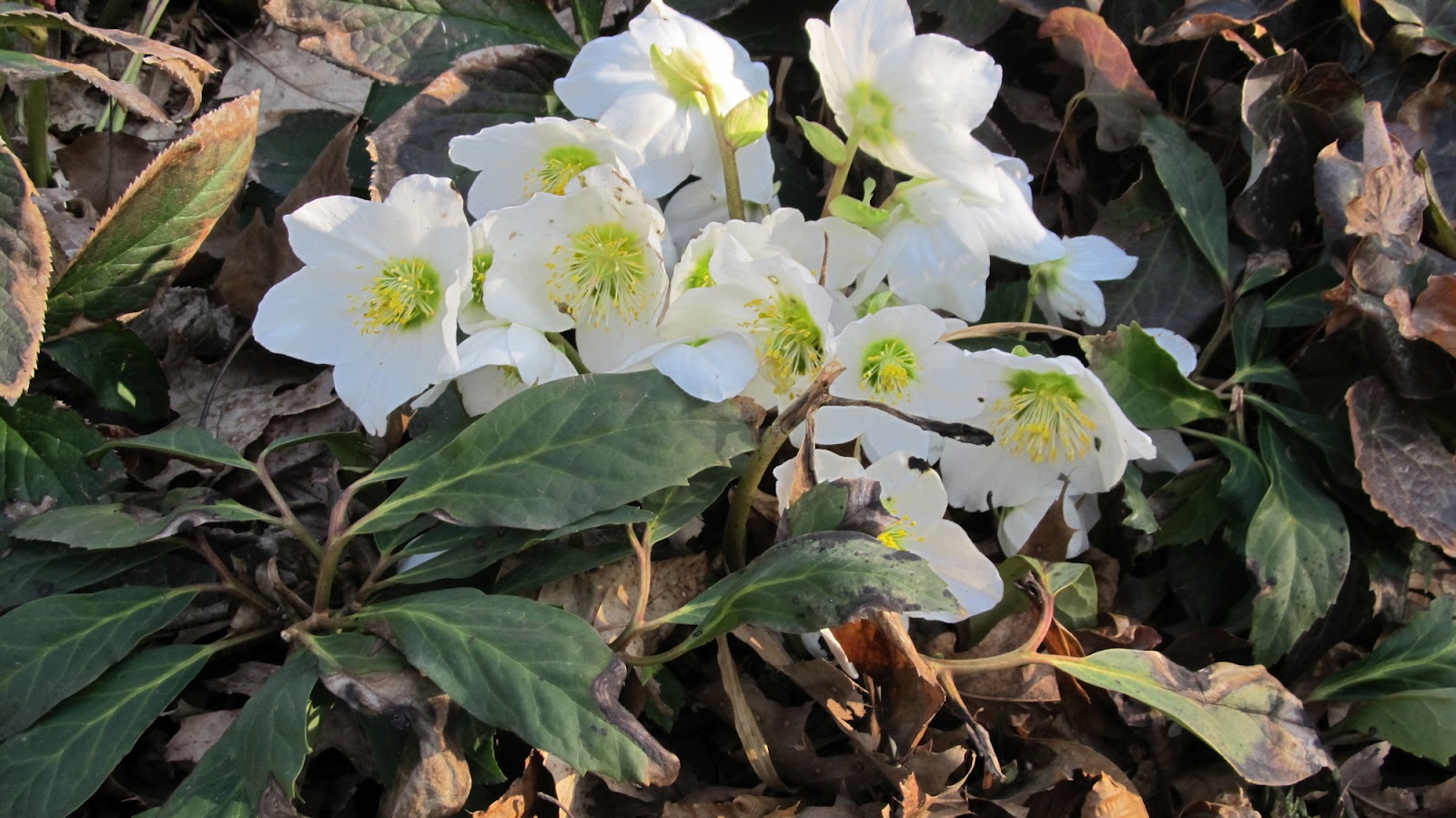
Hellebore - Helleborus Niger - Christmas Rose - Elleboro
and friends and relations

Christmas rose


Many years ago, walking in the hills above Griante, Lake Como, towards a small church with a view, San Martino, we happened upon an unforgettable scene: dozens and dozens of white hellebore growing in a dappled forest. They were so perfect, so abundant and thriving, it was a marvel. The sight is probably not mentioned in the guides because our walk took place at the end of winter, an unusual time for a hike in the hills. I now know that the hellebore were the well-loved Helleborus niger.

The middle to end of winter is when hellebore appears in the woods: first the dark green pointy leaves bursting up from the ground in a bush, then the ranuncula-like open-faced flowers which are white in this case, although many varieties and hybrids are cultivated nowadays and along with the glorious Amaryllis lily, seem to be the flower of the decade

from white to darkest purple

At Le Ripe we are lucky to have two varieties, though not the niger. Spread around our lime-rich woods in pleasing clusters, is the less appealing but still striking Helleborus foetidus, otherwise known as bearsfoot, dungwort and stinking hellebore, which has green, cup-like, drooping blooms edged with purplish red. It turns out not to be stinking at all. Research for this post has led to the satisfying discovery that this native, abundant 'stinking hellebore' is graced with the 'award of garden merit' by the Royal Horticultural Society. So there. 

our very own foetidus - such a shame, the name!

Sunday, February 17, 2013

Spring signs

Yes!
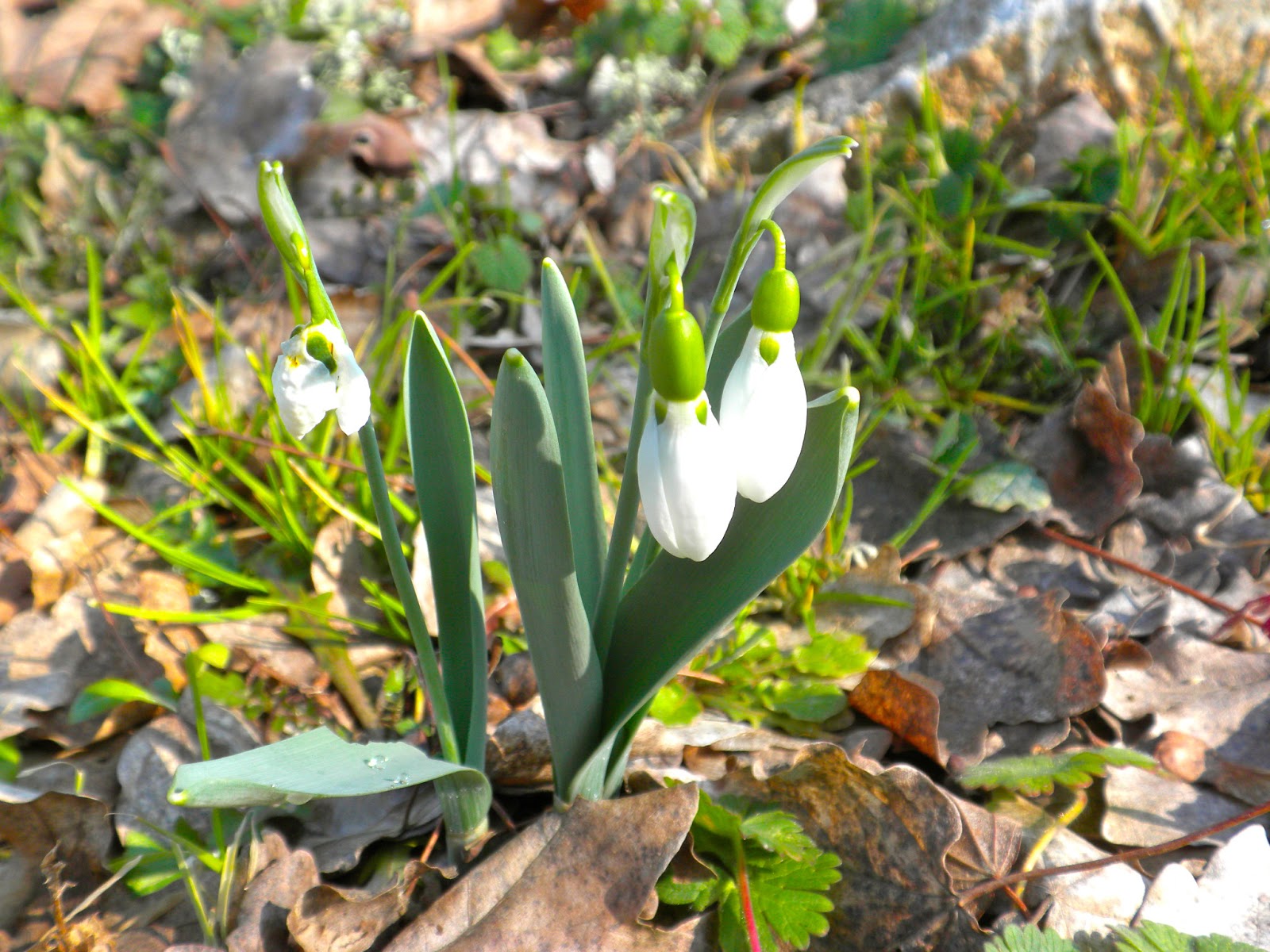
Snowdrops!
Galanthus Nivalis
Bucaneve


literally the first buds

Galanthus Nivalis flowers in winter but it presages the end of that season. It has three other appealing characteristics: it will poke up undeterred through snow, it spreads over time creating carpets of nodding white flowers, and perhaps best of all: the deer do not like it. I am not sure it is native here but even if not, it seems to be naturalising.

The common name snowdrop first appeared in the 1633 edition of John Gerard's Great Herbal. Other British traditional names include February fairmaids, dingle-dangle, Candlemas bells, Mary's tapers and, in parts of Yorkshire, snow piercers like the French perce-neige or Italian bucaneveAdapted from Wikipedia.
 

many clusters are now springing up and spreading


Wednesday, February 13, 2013

Feeding time in the orchard

Feeding the Trees

This is the time when you must feed the trees, before the growing season starts again. Last year and this I have supplemented my organic feed (compost and manure) with something stronger, called simply 'Gold' here. 
"Complete feed in every granule" so they say. It seems to work well.
Our fruit trees were sorely in need of extra help because our soil is stony and poor, winters harsh and summers hot. 
I feel like Florence Nightingale, wandering around the wards, offering succour to my ailing charges.
Now I trust their roots will stir and strengthen as they benefit from this extra care. Actually, the trees look happier already!
The next treatment will be copper sulphate and lime (bordeaux mixture) which I will spray on them, to ward off weevils, bugs and parasites.


early morning light
Responding to Explicit's comment below, (re bordeaux paste painted with a brush onto just the trunk of the fruit tree...): an excellent idea but what about the airborne bugs? In any case Explicit has kindly sent a photograph of this rather striking experiment. The trees are daubed in woad, like the Picts of old, ready to face Caesar and all other invaders. This reminds me of the much-beloved nectarine tree in Panzano which for a large part of the year is a glorious bright blue...


going native


Monday, February 11, 2013

Snow

Horizontal Snow

8am                                                                                                          10am


The snow is falling, or rather flying by, since the wind is carrying it horizontally. It must be rather wet as not much is sticking. But that always reminds me of the priceless moment in Fellini's Amarcord when someone says "It won't stick", "Non attacca mica" and the next day people are walking through tall walls of frozen snow...Have a look here where you can also watch the touching scene with the peacock:

Amarcord 'nevone' scene

They say that it will be raining by the afternoon, so I thought to record what we hope is a fleeting, sleeting snowstorm. Shall keep you posted....

1300: It is now raining heavily. No risk of an Amarcord scenario...