Saturday, December 27, 2014

The Roman Avenue?

Revealing the past


The 'Roman Road' when we first discovered it in 2005
Our first explorations at Le Ripe over 10 years ago were motivated by curiosity and caution. Our curiosity requires little explanation: we were about to acquire 30 hectares of wooded land; it is obvious we wanted to investigate. Our caution was owing to experience. So many times, on our quest for a home in Tuscany, were beautiful ruins revealed to be duds: one house situated beneath perilous-looking, overhanging cliffs; another not far from a pylon; wandering around yet another revealed giant pipes and steam vents connected to the boric acid and geothermal energy stations near Larderello; a short walk from another beautiful house opened onto the freeway and its collection of factories in the valley below: you name it, we found it. 
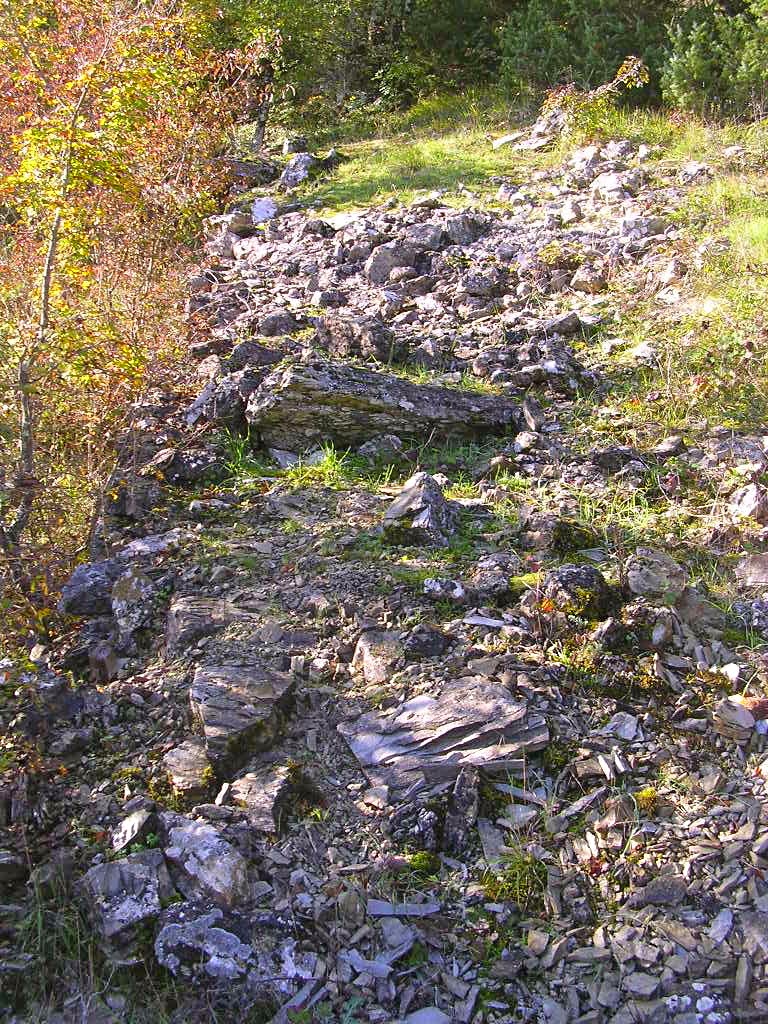
the top section of the 'Roman Road', in 2005

Wednesday, December 24, 2014

David and the Quakes


 Goliath returns
It could be the name of a 60s pop band, but instead the topic of this post is Michelangelo's David and the earthquakes which are currently making Florence and Chianti tremble.
epicentre near Greve in Chianti
From Friday December 19th 2014 two earthquakes of a reasonable if not terrifying magnitude (3.5 and 4.1 on the Richter scale) and multiple tremors have been unsettling the Chianti area directly south of Florence. Our dear Greve in Chianti, the delightful market town, cultural and logistical centre of the Chianti wine-growing district, is near the epicentre.

Monday, December 22, 2014

Apprenticeships in Tuscany

Masters, Journeymen and Apprentices in the 21st century


Tuscany in general and Florence in particular still today preserve precious pockets of working artisans, master craftsmen in various branches of the Arti e Mestieri (arts and trades) of old, who are the heirs and embodiment of traditions dating back to the Middle Ages.

The major guilds of medieval Florence: judges, lawyers and notaries; merchants, finishers and dyers of imported cloth; bankers and money-changers; wool manufacturers and merchants; silk weavers and merchants; physicians and apothecaries; furriers and skinners

The middle guilds: butchers and graziers; shoemakers; blacksmiths; master stonemasons and woodcarvers; linen manufacturers, cloth dealers and tailors; the minor guilds: vintners; innkeepers; oil merchants and grocers; curriers and tanners; armourers and swordsmiths; saddlers and harness-makers; carpenters; locksmiths, toolmakers and braziers; bakers and millers

If you walk around the area of Santo Spirito, and many other parts of the historic centre of Florence, you will come across dark workshops where elderly artisans are carving, cutting, etching, planing, turning, joining, moulding, plastering, painting, stitching, hammering, weaving, sculpting, restoring, as well as displaying and selling.

Sunday, December 14, 2014

The Return of the Wolf III

 Lupus in Fabula 
 or 'Speak of the Devil'


We have good reason to suppose that wolves are inhabiting or at least hunting in our neck of the woods. In the heart of Chianti where, despite our extensive woodlands, civilization (farmhouses, villas, roads, vineyards, olive groves, gardens, villages and towns) makes itself firmly felt. This phenomenon seems to be corroborated by a recent article in The Guardian newspaper.

 Locals have firm evidence that our deer have met their natural predator. The carcass of a roe deer was found mauled, amputated and gutted against a neighbour's fence. The desperate deer had sought refuge inside the fence but was caught, halfway to safety.

Sunday, November 23, 2014

Olive Oil 3

The sad tale of the 2014 olive débacle


Absent from Tuscany for a while, I nevertheless felt drawn to report from afar on this year's disastrous olive harvest. Trawling the internet for information I came across a site which says everything I would have liked to say. 

I can think of nothing more suitable than to alert readers to this page written by someone who has experienced the debacle in first person. The olives on our 18 trees were equally horrid this year, but we don't harvest them for oil. Yet we are equally affected: this year good local oil will be impossible to come by. 
And there is more bad news in 2015: Xylella fastidiosa


For more upbeat posts on olive oil, see my Olive Oil 1 and Olive Oil 2

We now have to hope for a good, cold winter and a dry summer for the 2015 harvest
 

Thursday, October 30, 2014

Fruit of the Month: the persimmon

Ripeness is All
 
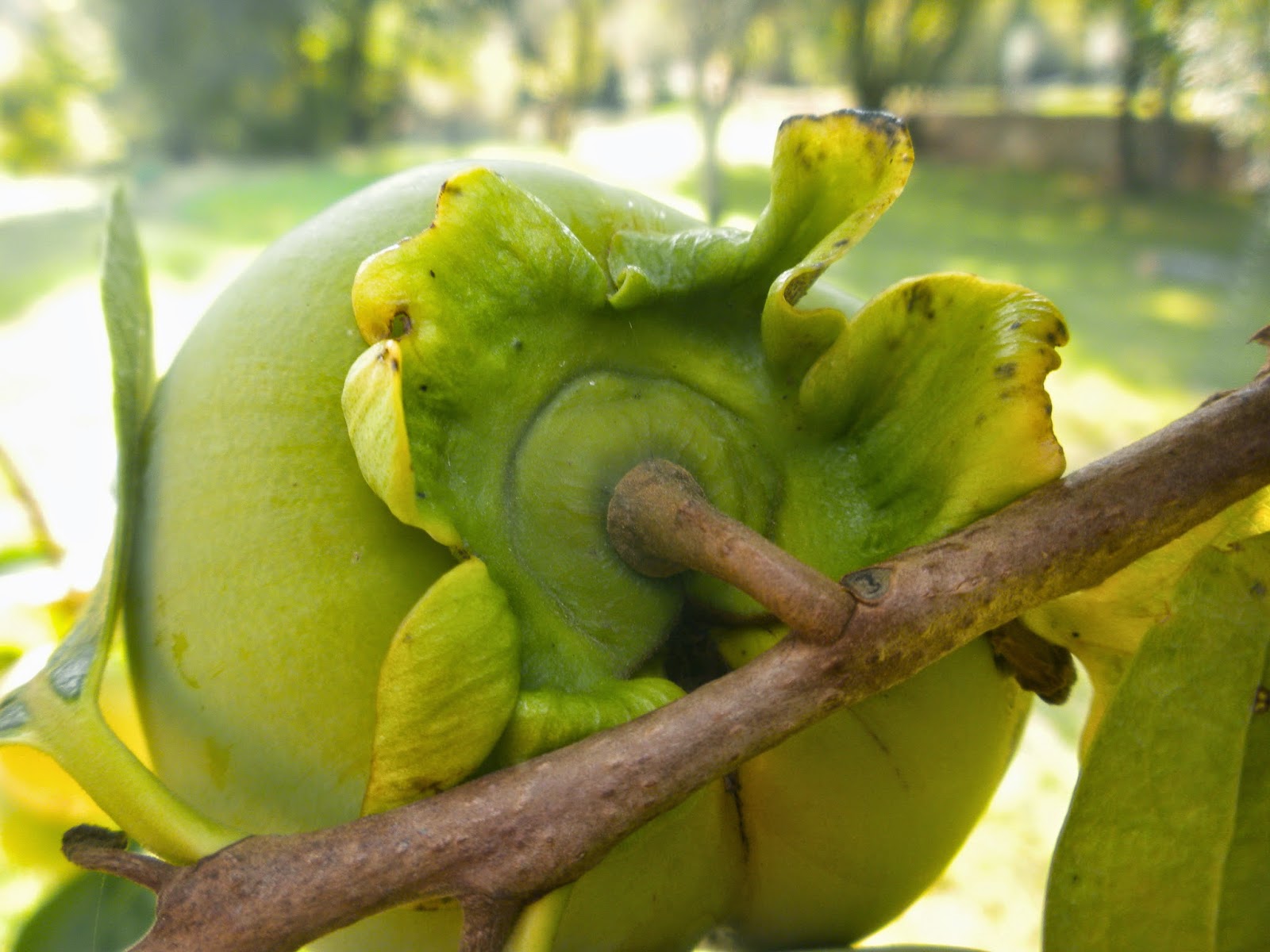
Of the genus diospyros, family Ebenaceae - which is the family of the ebony tree - the most widely consumed is the Asian persimmon Diospyros kaki. Diospyros comes from Greek, meaning divine fruit or literally, 'wheat of Zeus' otherwise translated as 'Jove's fire' or 'God's pear'. In modern Greek it is called lotos and associated with the food of the lotus-eaters in the Odyssey, although there are multiple candidates for this honour. Interestingly, it has several names in Italian: loto in the south, diosporo in central Italy, cachi or kaki in the north.


The pretty word 'persimmon' comes from Native American Algonquian pessamin, strangely meaning dry fruit. I wonder if this refers to the persimmon's astringency when under-ripe, which leaves the mouth chalky-dry, thanks to the fruit's high levels of tannins. To custom-ripen or 'blet' in the home, store the persimmons in a pot with some apples, pears or bananas which exude the ethylene needed for ripening. Alternatively, persimmons can be ripened through freezing.


Sunday, October 26, 2014

Florence's Slow Food Hall

il Mercato Centrale
- an historic market revisited


Florence's central market, located near San Lorenzo and the touristy outdoor market, is a piece of Florentine's domestic history. There are those of us who visited it as young tourists, to buy peaches for our picnic lunches in the Boboli gardens, or who recall 'the market gardeners and wild herb foragers who would sell their pickings much as in the Mayan markets of yore', to quote a friend. 
Nowadays even the ground floor stalls, shown above, look more like upmarket shops than market stalls.
This does not appear to detract from the quality of their ware although it probably affects the prices. All they same, they seemed to be humming when we visited on a weekday morning.
Yet this post focuses on the first floor of the market which has been transformed from the gritty, colourful, rustic reality of the past into a stylish, cheerful, (upmarket in quality but not, it appears, in price), food hall crammed with goodies. Since spring 2014, this is where the hungry working Florentine or the tourist who is unable to deal with all the raw produce downstairs, can come to savour the finished products. 
As you climb the stairs (or take an escalator) to the first floor the first thing you see is the attractive architecture of the old market: cast iron neo-classical pillars, pietra serena columns, overarching wrought iron girding and tall arched windows which let in considerable natural light. 


Monday, October 20, 2014

The Return of the Robin

Who killed Cock Robin?


     Who killed Cock Robin?
        I, said the Sparrow,
        with my bow and arrow,
        I killed Cock Robin.

        Who saw him die?
        I, said the Fly,
        with my little eye,
        I saw him die.


        Who caught his blood?
        I, said the Fish,
        with my little dish,
        I caught his blood.

        Who'll make the shroud?
        I, said the Beetle,
        with my thread and needle,
        I'll make the shroud.

        Who'll dig his grave?
        I, said the Owl,
        with my little trowel,
        I'll dig his grave.

        Who'll be the parson?
        I, said the Rook,
        with my little book,
        I'll be the parson.

        Who'll be the clerk?
        I, said the Lark,
        if it's not in the dark,
        I'll be the clerk.

        Who'll carry the link?
        I, said the Linnet,
        I'll fetch it in a minute,
        I'll carry the link.

        Who'll be chief mourner?
        I, said the Dove,
        I mourn for my love,
        I'll be chief mourner.

        Who'll carry the coffin?
        I, said the Kite,
        if it's not through the night,
        I'll carry the coffin.

        Who'll bear the pall?
        We, said the Wren,
        both the cock and the hen,
        We'll bear the pall.

        Who'll sing a psalm?
        I, said the Thrush,
        as she sat on a bush,
        I'll sing a psalm.

        Who'll toll the bell?
        I said the Bull,
        I am strong, I can pull,
        I'll toll the bell.

        All the birds of the air
        fell a-sighing and a-sobbing,
        when they heard the bell toll
        for poor Cock Robin.

 
The first robin redbreast of the cold season appeared yesterday in our garden and the lines of this old rhyme came to mind. 


Tuesday, October 7, 2014

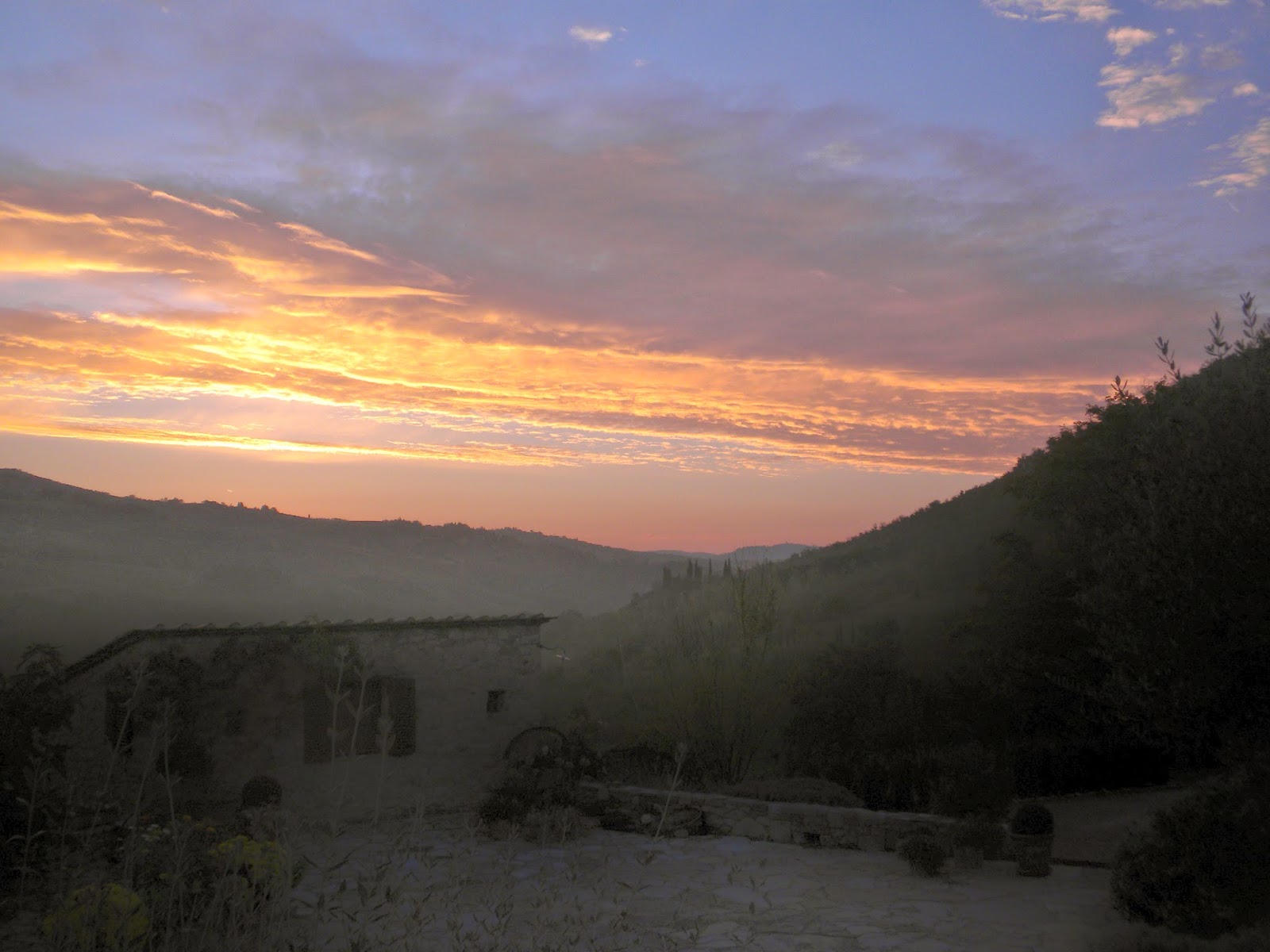
Autumn morning


looking towards Radda around 7am

 the garden a few minutes later


Sunday, October 5, 2014

A Vexed and Vexing Question: Hunting in Tuscany

The reality in those hills

What follows is not an apology for hunting, nor is it an outright critique. It is intended as more of a review of the current situation in the region of Tuscany.  

In provincial Tuscany, on the whole, hunting  is considered not only an ancient right, but a necessity. For centuries people lived off the land, relying on their own strengths to make a living, to feed their families: in short, to survive. Hunting was an essential part of this process. In addition, farmers, as all the world over, attempted to protect their flocks, their crops and their families from the incursions of the wild. Once upon a time wolves roamed these hills, and although boar are not indigenous, they were introduced a long time ago.


Saturday, September 20, 2014

Chianti Classico and the Panzano Wine Festival

Vino al Vino
2014


Each year for the past 19 years the 20 or so wine producers from the area around Panzano in Chianti gather in the main square of the town to introduce their labels to the public. For the modest sum of 15 euros the taster acquires a glass (plus a glass-holder to hang about the neck and a handy booklet for taking notes) and is free to taste any of the local wines on display.
representatives (in no particular order), from the vineyards below

CandialleCasaloste, Castello dei Rampolla, Cennatoio, Fattoria La Quercia, Fattoria Rignana, Fontodi, Il Molino di Grace, Il Palagio, La Massa, Le Fonti, Le Cinciole, Montebernardi, Panzanello, Renzo Marinai, Tenuta degli Dei, Vecchie Terre di Montefili, VignoleVilla Cafaggio


I wrote on the Wine Festival here  but this current post intends simply to summarise what is on offer and describe the characteristics of this particular wine-producing area.


Thursday, September 18, 2014

the Thorn Tree and its associations

 The Facts and Fables of the Hawthorn

the hawthorn in September
Summer has all but ended. We still await the equinox to declare it officially over, but autumn is clearly making itself felt. A series of heavy rainfalls have seemingly washed the green from the landscape which is now tinged with yellow, the cooler temperatures and shorter days reminding us of what's to come. Our fig trees are laden, the quinces are heavy on the bough and bright berries glow on hedge and shrub (above deer height, for the lower fruits have been devoured).

the berries or 'haws' are really pomes which contain stones like those in plums


I was admiring the scarlet berries of the hawthorn today and it occurred to me that I have not done this tree/shrub justice in my recent post on trees at Le Ripe. This is a tree with a story, or rather many stories.